Have you ever been writing a blog post, school assignment, or social update and realized you keep using the same phrase over and over again? Many writers look for synonyms for social media to make their content more engaging and professional.
Today, social media plays a huge role in our lives. We use it to chat with friends, share photos, watch videos, and learn new things. Because the term appears so often, knowing different synonyms for social media can help you avoid repetition and improve your writing.
For example, imagine you are writing a blog about online communication. Instead of repeating “social media” in every paragraph, you can use related terms like “social networks” or “online communities.” This makes your content easier to read and more interesting.
In simple English, social media means websites and apps where people connect, communicate, and share content online. Learning synonyms for social media is useful for students, bloggers, content writers, marketers, and anyone who wants stronger English skills. These alternatives can help you write better emails, essays, articles, and everyday messages.
✦✦✦ Top 5 Synonyms for Social Media ✦✦✦
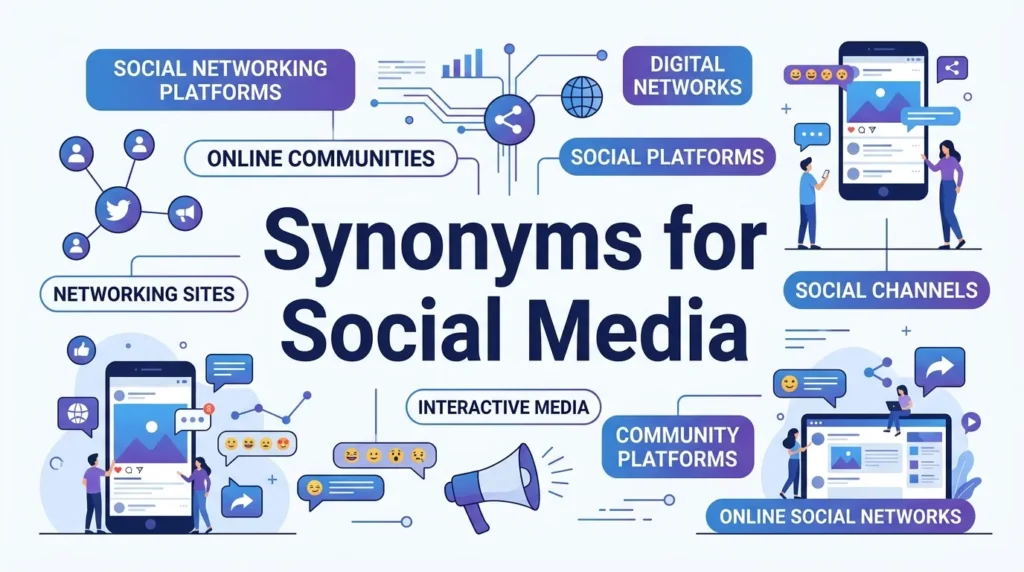
Social Networks • Social Platforms • Networking Sites • Online Communities • Digital Platforms
✦✦✦ Next 5 Synonyms for Social Media ✦✦✦
Community Platforms • Interactive Platforms • Online Networking Platforms • Digital Communities • Social Sharing Platforms
Pronunciation of “Social Media”
Phonetic Spelling: soh-shuhl mee-dee-uh
IPA Format: /ˌsoʊ.ʃəl ˈmiː.di.ə/
Simple Breakdown: SOH + shuhl + MEE + dee + uh
Syllables of “Social Media”
Social = so-cial (2 syllables)
Media = me-di-a (3 syllables)
Total Syllables = 5
List of 50 Synonyms for Social Media
Social Networks
Meaning
Websites where people connect and communicate.
Examples
- I share photos on social networks.
- Many students use social networks daily.
Social Platforms
Meaning
Online places where people interact and share content.
Examples
- Brands advertise on social platforms.
- She follows creators on social platforms.
Networking Sites
Meaning
Websites that help people build connections.
Examples
- Professionals use networking sites for jobs.
- I joined several networking sites this year.
Online Communities
Meaning
Groups of people who interact online.
Examples
- Online communities help people learn skills.
- I found useful advice in online communities.
Digital Platforms
Meaning
Internet-based systems for sharing information.
Examples
- Businesses market products on digital platforms.
- Many creators earn money through digital platforms.
Community Platforms
Meaning
Online spaces built around shared interests.
Examples
- Community platforms connect hobby lovers.
- I joined community platforms for gardening.
Interactive Platforms
Meaning
Websites that encourage user participation.
Examples
- Interactive platforms make learning fun.
- Students enjoy interactive platforms after class.
Online Networking Platforms
Meaning
Digital services that help people connect.
Examples
- Online networking platforms support communication.
- Companies use online networking platforms daily.
Digital Communities
Meaning
Internet groups where people share ideas.
Examples
- Digital communities encourage teamwork.
- I learn new tips from digital communities.
Social Sharing Platforms
Meaning
Websites where users share content.
Examples
- Social sharing platforms spread information quickly.
- She uploads videos to social sharing platforms.
Social Communication Platforms
Meaning
Online places where people communicate and interact.
Examples
- Many creators use social communication platforms.
- Our club shares updates on social communication platforms.
Web Communities
Meaning
Groups of people connected through websites.
Examples
- Web communities help users solve problems.
- I joined several web communities last month.
Online Social Channels
Meaning
Internet channels used for communication and sharing.
Examples
- Businesses promote products through online social channels.
- We follow updates on online social channels.
Virtual Communities
Meaning
Groups that interact online instead of meeting in person.
Examples
- Virtual communities connect people worldwide.
- I enjoy joining virtual communities.
User-Generated Content Platforms
Meaning
Websites where users create and share content.
Examples
- Videos spread fast on user-generated content platforms.
- Many artists use user-generated content platforms.
Digital Networking Sites
Meaning
Websites designed for making online connections.
Examples
- Job seekers use digital networking sites.
- She met new contacts through digital networking sites.
Social Interaction Platforms
Meaning
Online places that encourage communication.
Examples
- Social interaction platforms help friends stay connected.
- Students collaborate on social interaction platforms.
Online Engagement Platforms
Meaning
Websites that encourage active participation.
Examples
- Brands grow audiences on online engagement platforms.
- Schools use online engagement platforms for announcements.
Content Sharing Networks
Meaning
Platforms where people share digital content.
Examples
- Content sharing networks distribute information quickly.
- He posts photos on content sharing networks.
Social Communication Networks
Meaning
Networks used for online conversations and updates.
Examples
- Social communication networks keep people informed.
- Families use social communication networks every day.
Online Social Platforms
Meaning
Websites where people connect and communicate online.
Examples
- Online social platforms are popular among teenagers.
- Businesses advertise on online social platforms.
Digital Social Networks
Meaning
Internet networks built for social interaction.
Examples
- Digital social networks connect millions of users.
- I learned about the event through digital social networks.
Interactive Communities
Meaning
Online groups where members actively participate.
Examples
- Interactive communities encourage discussions.
- Gamers enjoy interactive communities.
Community Networks
Meaning
Networks that bring people together online.
Examples
- Community networks help neighbors communicate.
- We use community networks to share news.
Online Forums
Meaning
Websites where people discuss topics and ask questions.
Examples
- Online forums provide useful answers.
- I found great advice on online forums.
Discussion Platforms
Meaning
Websites built for conversations and opinions.
Examples
- Discussion platforms allow idea sharing.
- Students use discussion platforms for projects.
Social Hubs
Meaning
Central online places for social activity.
Examples
- Social hubs attract large audiences.
- Many communities grow through social hubs.
Virtual Networking Sites
Meaning
Websites used to build online connections.
Examples
- Professionals join virtual networking sites.
- She expanded her contacts through virtual networking sites.
Online Gathering Spaces
Meaning
Digital places where people meet online.
Examples
- Online gathering spaces host group discussions.
- Friends chat in online gathering spaces.
Internet Communities
Meaning
Groups of people connected through the internet.
Examples
- Internet communities share common interests.
- I participate in several internet communities.
Digital Interaction Platforms
Meaning
Websites designed for user interaction.
Examples
- Digital interaction platforms improve communication.
- Teachers use digital interaction platforms in class.
Content Communities
Meaning
Groups focused on creating and sharing content.
Examples
- Content communities support creative people.
- Writers join content communities for feedback.
Online Sharing Networks
Meaning
Networks used to share information and media.
Examples
- Online sharing networks spread updates quickly.
- Many photos appear on online sharing networks.
Web-Based Communities
Meaning
Communities that exist on websites.
Examples
- Web-based communities connect people with similar interests.
- I enjoy learning in web-based communities.
Social Engagement Networks
Meaning
Networks that encourage participation and interaction.
Examples
- Social engagement networks increase audience activity.
- Brands succeed on social engagement networks.
Collaborative Platforms
Meaning
Websites where people work and share together.
Examples
- Collaborative platforms improve teamwork.
- Our group uses collaborative platforms for projects.
User Communities
Meaning
Groups formed by users around shared interests.
Examples
- User communities offer helpful advice.
- Many brands support user communities.
Digital Communication Channels
Meaning
Online channels used for communication.
Examples
- Digital communication channels spread information fast.
- Schools use digital communication channels daily.
Social Web Platforms
Meaning
Web platforms designed for social interaction.
Examples
- Social web platforms connect people globally.
- Creators depend on social web platforms.
Community Sharing Sites
Meaning
Websites where communities share content and ideas.
Examples
- Community sharing sites encourage collaboration.
- I upload photos to community sharing sites.
Virtual Social Spaces
Meaning
Online spaces where people socialize and interact.
Examples
- Virtual social spaces help friends stay connected.
- Teens enjoy virtual social spaces every day.
Networking Communities
Meaning
Groups focused on building personal or professional connections.
Examples
- Networking communities help professionals grow.
- I joined networking communities for career advice.
Social Connection Platforms
Meaning
Platforms that help people create relationships online.
Examples
- Social connection platforms make communication easier.
- Many families use social connection platforms.
Digital Meeting Places
Meaning
Online places where people gather and communicate.
Examples
- Digital meeting places host virtual events.
- Friends meet in digital meeting places.
Web Networking Platforms
Meaning
Internet platforms used for networking and communication.
Examples
- Web networking platforms support business growth.
- She discovered opportunities on web networking platforms.
Online Connection Hubs
Meaning
Central online places for making connections.
Examples
- Online connection hubs bring people together.
- Professionals use online connection hubs frequently.
Internet Networking Sites
Meaning
Websites that help people connect through the internet.
Examples
- Internet networking sites improve communication.
- Students explore internet networking sites.
Social Content Platforms
Meaning
Platforms used for sharing social content online.
Examples
- Social content platforms host videos and photos.
- Influencers rely on social content platforms.
Online Social Ecosystems
Meaning
Large connected networks of online users and communities.
Examples
- Online social ecosystems grow every year.
- Businesses study online social ecosystems carefully.
Community Interaction Platforms
Meaning
Platforms that encourage community discussions and engagement.
Examples
- Community interaction platforms build strong relationships.
- Members stay active on community interaction platforms.
Why Use Synonyms for Social Media?
Using synonyms for social media helps you become a stronger writer and speaker. Instead of repeating the same phrase, you can choose different words that match your topic and audience.
For bloggers and content writers, these alternatives make articles more engaging and SEO-friendly. For students, they improve essays, reports, and presentations and for professionals, they help create polished emails and marketing content.
Using a variety of words also makes your communication sound more natural. Readers enjoy content that is fresh and easy to read. By learning and practicing these synonyms, you can express ideas more clearly and confidently.
Frequently Asked Questions (FAQ)
What are synonyms for social media?
Synonyms for social media are alternative words or phrases that describe online platforms where people communicate, share content, and connect with others. Examples include social networks, online communities, and social platforms.
Why should I learn synonyms for social media?
Learning synonyms helps improve vocabulary, reduce repetition, and make writing more interesting. It is especially useful for students, bloggers, marketers, and content creators.
Are all synonyms for social media exactly the same?
No. Some terms focus on networking, while others highlight communication, content sharing, or community building. Their meanings are similar but not always identical.
Which synonym is the most common?
“Social networks” and “social platforms” are among the most commonly used alternatives to social media.
Can I use these synonyms in academic writing?
Yes. Many of these terms can be used in essays, reports, research papers, and presentations when discussing online communication and digital platforms.
How can content writers benefit from these synonyms?
Content writers can avoid keyword stuffing, improve readability, enhance SEO, and make articles more engaging by using a variety of related terms.
Do these synonyms help with SEO?
Yes. Related keywords and synonyms help search engines better understand your content and can improve topical relevance when used naturally.
Which synonym is best for business writing?
Terms such as “digital platforms,” “networking sites,” “social platforms,” and “online engagement platforms” are often suitable for professional and business content.
Conclusion
Learning synonyms for social media is a simple but powerful way to improve your vocabulary. Whether you are writing a blog post, school assignment, business article, or social update, using different words can make your content more engaging and professional.
These alternatives help you avoid repetition, improve readability, and communicate ideas more effectively. Students can strengthen essays, bloggers can create richer content, and marketers can write more persuasive messages.
The best way to remember these words is through regular practice. Try using a few new synonyms each week in emails, essays, articles, and daily conversations. Over time, your vocabulary will grow, your writing will become more polished, and your confidence in English communication will increase.

I am the founder of SynonymOver.com, a platform dedicated to providing accurate, easy-to-understand synonyms that help readers choose the right words with confidence. I create clear, SEO-driven content focused specifically on synonyms, word meanings, and precise language use.
My work is built on simplicity, accuracy, and practical usage—ensuring that every synonym is not just listed, but explained in a way that makes it easy to apply in real writing. I focus on delivering user-friendly content for students, writers, and professionals looking to improve their vocabulary.
What sets my work apart is a strong focus on clarity and relevance, offering meaningful alternatives rather than generic word lists. I continuously apply modern SEO strategies to ensure my content reaches and benefits a wider audience.