Have you ever had a day when everything feels heavy, and you just can’t explain your mood? Ever struggled to find the right words to describe a heavy, lingering sadness that just won’t lift? You’re not alone. Language has a powerful way of helping us understand and express complex emotions, and that’s exactly where synonyms for depression come into play. That feeling is often called depression, but sometimes that one word is not enough.
The phrase synonyms for depression helps you find better words to explain different types of sadness.
In simple English, depression means feeling very sad, low, or without energy for a long time.
For example, a student might say, “I feel down after failing a test,” instead of saying depression. This is where learning synonyms for depression becomes helpful.
These words are useful for students, bloggers, and content writers because they make writing more clear and interesting. They also help daily English users express feelings better in conversations.
When you use different synonyms for depression, your language becomes richer and more natural. Instead of repeating one word again and again, you can choose the best word for each situation.
✨ Top 5 synonyms for depression list ✨
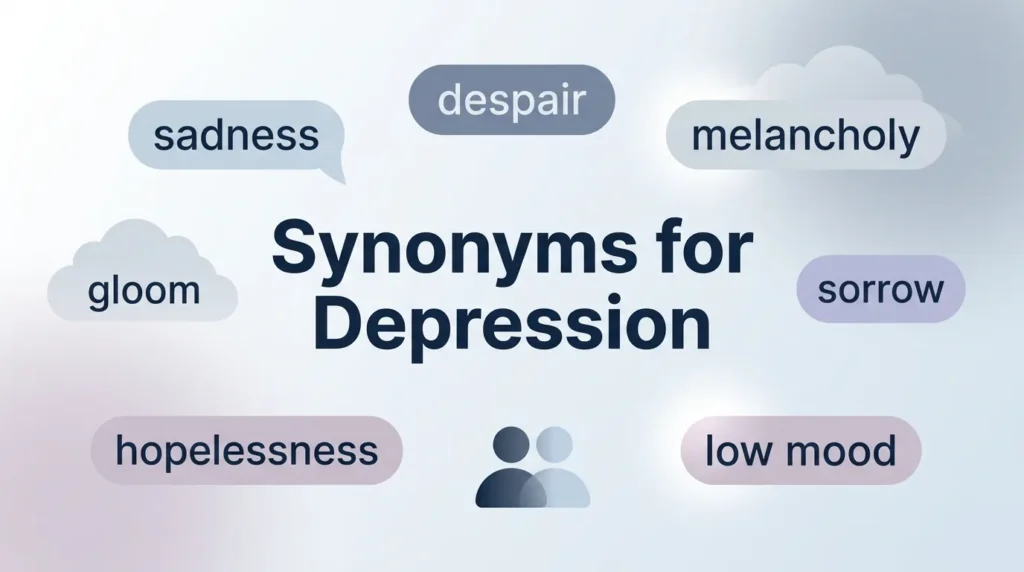
melancholy • sadness • gloom • sorrow • despair
✨ Next Top 5 synonyms for depression list ✨
misery • unhappiness • blues • grief • dejection
Pronunciation of “synonyms for depression”
- Phonetic: sin-uh-nims for dih-presh-un
- IPA: /ˈsɪnənɪmz fɔːr dɪˈprɛʃən/
- Breakdown: syn-o-nyms | for | de-pres-sion
Syllables of “synonyms for depression”
- syn-o-nyms (3 syllables)
- for (1 syllable)
- de-pres-sion (3 syllables)
It simply means breaking the phrase into small sound parts to say it easily.
List of 50 synonyms for depression
Melancholy
Meaning
A quiet and deep sadness.
Examples
- I felt melancholy on a rainy day.
- He sat alone in a melancholy mood.
Sadness
Meaning
A feeling of being unhappy.
Examples
- Her voice showed sadness.
- I saw sadness in his eyes.
Gloom
Meaning
A dark and heavy feeling.
Examples
- The room had a sense of gloom.
- He walked in gloom after the news.
Sorrow
Meaning
A strong feeling of sadness.
Examples
- She cried in sorrow.
- His face showed deep sorrow.
Despair
Meaning
Feeling no hope at all.
Examples
- He sat in despair after losing.
- She felt despair during hard times.
Misery
Meaning
Great unhappiness or pain.
Examples
- He lived in misery for years.
- The loss brought misery to her.
Unhappiness
Meaning
Not feeling happy.
Examples
- His unhappiness was clear.
- She spoke about her unhappiness.
Blues
Meaning
Feeling a little sad.
Examples
- I have the blues today.
- Music helped his blues.
Grief
Meaning
Deep sadness after loss.
Examples
- She felt grief after her loss.
- Grief stayed with him for months.
Dejection
Meaning
Feeling low and discouraged.
Examples
- He showed dejection after failure.
- Her face had dejection.
Despondency
Meaning
Loss of hope.
Examples
- He fell into despondency.
- She spoke in despondency.
Heartache
Meaning
Emotional pain.
Examples
- The breakup caused heartache.
- He lived with heartache.
Low spirits
Meaning
Feeling down.
Examples
- I have low spirits today.
- She stayed quiet in low spirits.
Mournfulness
Meaning
A sad and grieving feeling.
Examples
- His tone was mournful.
- The song had mournfulness.
Woe
Meaning
Great sadness.
Examples
- He spoke of his woe.
- Woe filled her heart.
Dismay
Meaning
Feeling upset and shocked.
Examples
- He looked in dismay.
- The news caused dismay.
Hopelessness
Meaning
Feeling no hope.
Examples
- She felt hopelessness inside.
- Hopelessness made him quiet.
Lowness
Meaning
Feeling emotionally low.
Examples
- He had emotional lowness.
- She felt lowness all day.
Downheartedness
Meaning
Feeling sad and weak.
Examples
- He showed downheartedness.
- She spoke with downheartedness.
Desolation
Meaning
Feeling empty and alone.
Examples
- He felt desolation inside.
- The place had desolation.
Misfortune
Meaning
Bad events causing sadness.
Examples
- Misfortune followed him.
- She spoke of her misfortune.
Anguish
Meaning
Very strong pain or sadness.
Examples
- He cried in anguish.
- Anguish filled her voice.
Weariness
Meaning
Feeling tired and low.
Examples
- He showed weariness.
- She felt emotional weariness.
Dreariness
Meaning
Dull and sad feeling.
Examples
- The day felt dreary.
- He lived in dreariness.
Sullenness
Meaning
Silent and unhappy mood.
Examples
- He stayed in sullenness.
- She showed sullenness.
Distress
Meaning
Strong worry and sadness.
Examples
- He was in distress.
- The news caused distress.
Pain
Meaning
Emotional hurt.
Examples
- She felt deep pain.
- His words showed pain.
Regret
Meaning
Feeling sorry for past actions.
Examples
- He had regret.
- She spoke with regret.
Remorse
Meaning
Deep guilt and sadness.
Examples
- He felt remorse.
- She cried in remorse.
Burden
Meaning
A heavy emotional weight.
Examples
- He carried a burden.
- She felt a burden inside.
Fatigue
Meaning
Extreme tiredness.
Examples
- He showed fatigue.
- She felt mental fatigue.
Anxiety
Meaning
Worry and fear.
Examples
- Anxiety kept him awake.
- She felt anxiety often.
Loneliness
Meaning
Feeling alone.
Examples
- He felt loneliness.
- She cried in loneliness.
Isolation
Meaning
Being cut off from others.
Examples
- Isolation hurt him.
- She stayed in isolation.
Emptiness
Meaning
Feeling nothing inside.
Examples
- He felt emptiness.
- Her words showed emptiness.
Bitterness
Meaning
Angry sadness.
Examples
- He spoke with bitterness.
- She felt bitterness inside.
Dullness
Meaning
Lack of feeling or joy.
Examples
- Life felt dull.
- He showed dullness.
Apathy
Meaning
No interest or feeling.
Examples
- He showed apathy.
- She lived with apathy.
Listlessness
Meaning
No energy or interest.
Examples
- He felt listless.
- She showed listlessness.
Blue mood
Meaning
A sad mood.
Examples
- I am in a blue mood.
- He stayed in a blue mood.
Heavy heart
Meaning
Feeling deep sadness.
Examples
- She had a heavy heart.
- He spoke with a heavy heart.
Broken spirit
Meaning
Loss of hope and strength.
Examples
- He had a broken spirit.
- She showed a broken spirit.
Dark mood
Meaning
A very sad feeling.
Examples
- He was in a dark mood.
- She stayed in a dark mood.
Emotional pain
Meaning
Hurt feelings inside.
Examples
- He felt emotional pain.
- She spoke about emotional pain.
Inner sadness
Meaning
Sadness inside the heart.
Examples
- He had inner sadness.
- She felt inner sadness.
Mental strain
Meaning
Stress and sadness together.
Examples
- He felt mental strain.
- She showed mental strain.
Low mood
Meaning
Feeling down.
Examples
- He had a low mood.
- She stayed in a low mood.
Sad state
Meaning
Being unhappy.
Examples
- He was in a sad state.
- She lived in a sad state.
Emotional low
Meaning
Feeling very down.
Examples
- He hit an emotional low.
- She stayed in an emotional low.
Dark feelings
Meaning
Strong negative emotions.
Examples
- He had dark feelings.
- She spoke of dark feelings.
Conclusion
Wrapping up, understanding and using the right synonyms for depression can elevate both your writing and communication. Words like melancholy, sadness, despair, gloom, and low spirits each carry slightly different tones, helping you express emotions with greater clarity and precision. Whether you’re crafting content, improving vocabulary, or aiming for optimisation, choosing varied yet relevant terms prevents repetition and keeps your text engaging.
Learning synonyms for depression can greatly improve your writing and speaking skills. When you know many words, you can express feelings in a more clear and powerful way.
For bloggers and content writers, using different words keeps content fresh and engaging. Students can write better essays, and daily English users can communicate emotions more naturally.
Try using these words in emails, school work, and daily conversations. Practice a few depression synonyms every day, and soon your vocabulary will grow stronger. The more you use synonyms for depression, the more confident and expressive you will become.
FAQ
Q1: Why should I learn synonyms for depression?
Learning synonyms helps you express feelings better and avoid repeating the same word in writing or speech.
Q2: Are all synonyms for depression the same?
No, each word has a slightly different meaning and level of sadness.
Q3: Can students use these words in essays?
Yes, these words make essays more interesting and improve vocabulary.
Q4: How can I remember these synonyms easily?
Practice using them in daily sentences and conversations.

I am the founder of SynonymOver.com, a platform dedicated to providing accurate, easy-to-understand synonyms that help readers choose the right words with confidence. I create clear, SEO-driven content focused specifically on synonyms, word meanings, and precise language use.
My work is built on simplicity, accuracy, and practical usage—ensuring that every synonym is not just listed, but explained in a way that makes it easy to apply in real writing. I focus on delivering user-friendly content for students, writers, and professionals looking to improve their vocabulary.
What sets my work apart is a strong focus on clarity and relevance, offering meaningful alternatives rather than generic word lists. I continuously apply modern SEO strategies to ensure my content reaches and benefits a wider audience.