Have you ever spent hours creating a blog post, article, or social media update only to realize the same word keeps appearing over and over again? Repetition can make even the most valuable writing feel dull and uninspiring. That’s why learning and using synonyms for content is an essential skill for writers, students, marketers, and professionals who want their communication to sound fresh, engaging, and polished.
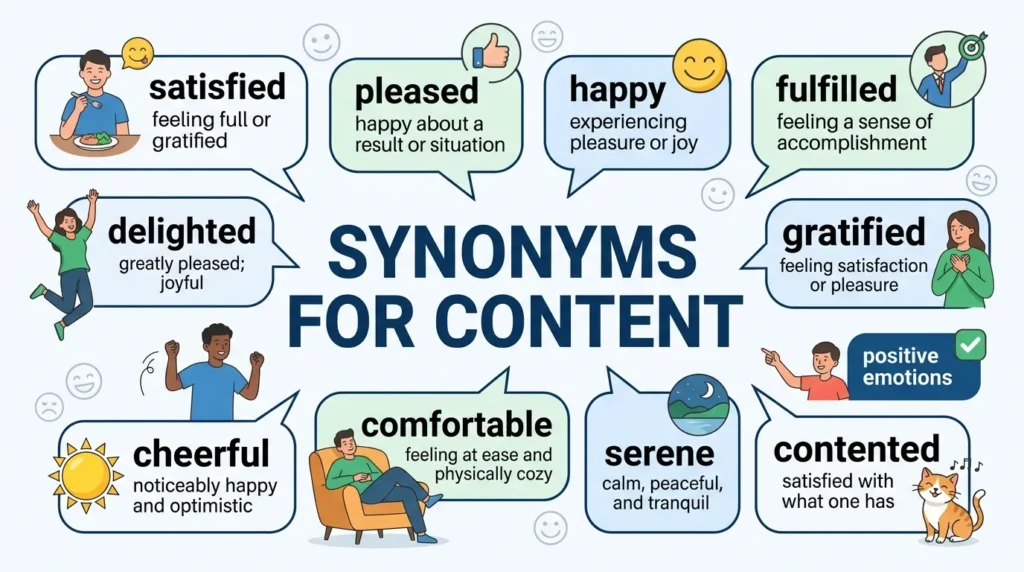
Synonyms for content are words that have a similar meaning to the word content. The word content usually means being happy, satisfied, or at peace with what you have. Learning synonyms for content helps you express feelings more clearly and naturally. Whether you are writing essays, blogs, emails, or speaking in daily conversations, knowing different synonyms for content can make your language richer and more engaging.
Imagine finishing a big project after days of hard work. You sit back, smile, and feel calm because everything went well. That feeling is often called being content. However, English offers many other words that can describe that same feeling in different ways.
A simple real-life example is a student who studies hard for an exam and receives a good grade. The student feels content because the effort paid off.
Learning these words is useful for:
- Students who want stronger essays.
- Bloggers who want engaging content.
- Content writers who need variety in writing.
- Daily English users who want better communication.
“A rich vocabulary opens the door to better communication.”
“The right word can make a simple message more powerful.”
“Good writing starts with choosing the right words.”
In this guide, you’ll discover the best synonyms for content, their meanings, examples, and when to use them, helping you communicate with greater clarity and confidence.
1. Satisfied
Meaning: Feeling happy because something is good enough.
Examples:
- I am satisfied with my test score.
- She felt satisfied after dinner.
2. Happy
Meaning: Feeling joy or pleasure.
Examples:
- He looks happy today.
- We were happy with the result.
3. Pleased
Meaning: Feeling glad about something.
Examples:
- Mom was pleased with my work.
- They were pleased to help.
4. Delighted
Meaning: Very happy and excited.
Examples:
- She was delighted by the gift.
- We were delighted to see them.
5. Cheerful
Meaning: Feeling bright and positive.
Examples:
- He stayed cheerful all day.
- Her cheerful smile helped everyone.
6. Glad
Meaning: Feeling happy about something.
Examples:
- I am glad you came.
- She was glad to hear the news.
7. Joyful
Meaning: Full of happiness.
Examples:
- The children were joyful.
- It was a joyful event.
8. Grateful
Meaning: Feeling thankful.
Examples:
- I am grateful for your help.
- She felt grateful today.
9. Comfortable
Meaning: Feeling relaxed and at ease.
Examples:
- I feel comfortable here.
- He looked comfortable in the chair.
10. Relaxed
Meaning: Free from stress.
Examples:
- She felt relaxed after work.
- We stayed relaxed during the trip.
11. Calm
Meaning: Peaceful and quiet inside.
Examples:
- He remained calm.
- The room felt calm.
12. Peaceful
Meaning: Free from worry or trouble.
Examples:
- It was a peaceful evening.
- She enjoyed the peaceful view.
13. Serene
Meaning: Very calm and peaceful.
Examples:
- The lake looked serene.
- She had a serene expression.
14. Tranquil
Meaning: Quiet and restful.
Examples:
- The garden felt tranquil.
- We enjoyed a tranquil morning.
15. Fulfilled
Meaning: Feeling complete and satisfied.
Examples:
- He felt fulfilled after helping.
- She felt fulfilled at work.
16. Contented
Meaning: Quietly happy and satisfied.
Examples:
- The baby looked contented.
- He felt contented with life.
17. Blissful
Meaning: Extremely happy.
Examples:
- They spent a blissful weekend.
- She felt blissful after vacation.
18. Overjoyed
Meaning: Extremely happy.
Examples:
- He was overjoyed by the news.
- We were overjoyed to win.
19. Ecstatic
Meaning: Very excited and happy.
Examples:
- She was ecstatic about the award.
- They felt ecstatic after victory.
20. Thrilled
Meaning: Very excited and pleased.
Examples:
- I was thrilled to meet him.
- She felt thrilled today.
21. Thankful
Meaning: Feeling appreciation.
Examples:
- We are thankful for support.
- She felt thankful afterward.
22. Appreciative
Meaning: Showing gratitude.
Examples:
- He was appreciative of the gift.
- They seemed appreciative.
23. At Ease
Meaning: Feeling relaxed and comfortable.
Examples:
- I felt at ease there.
- She looked at ease.
24. Secure
Meaning: Feeling safe and settled.
Examples:
- He felt secure at home.
- The child felt secure.
25. Comfortable in One’s Skin
Meaning: Feeling happy with yourself.
Examples:
- She is comfortable in her skin.
- He feels comfortable in his skin.
26. Satisfied-minded
Meaning: Feeling happy with what you have.
Examples:
- She stayed satisfied-minded all year.
- He felt satisfied-minded after the meeting.
27. Gratified
Meaning: Feeling pleased because something good happened.
Examples:
- I felt gratified by the praise.
- She was gratified with the result.
28. Buoyant
Meaning: Feeling cheerful and positive.
Examples:
- He remained buoyant all day.
- The team felt buoyant after winning.
29. Sunny
Meaning: Having a happy and positive attitude.
Examples:
- She has a sunny personality.
- His sunny mood spread to others.
30. Optimistic
Meaning: Expecting good things to happen.
Examples:
- I feel optimistic about tomorrow.
- She stayed optimistic during the project.
31. Upbeat
Meaning: Feeling cheerful and hopeful.
Examples:
- He sounded upbeat on the phone.
- We stayed upbeat despite challenges.
32. Merry
Meaning: Happy and full of enjoyment.
Examples:
- Everyone was merry at the party.
- The children felt merry during the holiday.
33. Jolly
Meaning: Happy and friendly.
Examples:
- He is a jolly neighbor.
- She gave a jolly laugh.
34. Lighthearted
Meaning: Free from worry and cheerful.
Examples:
- We enjoyed a lighthearted chat.
- She stayed lighthearted all afternoon.
35. Carefree
Meaning: Having no worries.
Examples:
- The children seemed carefree.
- He felt carefree on vacation.
36. Easygoing
Meaning: Relaxed and not easily upset.
Examples:
- She is easygoing and friendly.
- He remained easygoing during the trip.
37. Harmonious
Meaning: Peaceful and balanced.
Examples:
- They lived a harmonious life.
- The group worked in a harmonious way.
38. Well-Pleased
Meaning: Very satisfied with something.
Examples:
- The teacher was well-pleased.
- She felt well-pleased with her work.
39. Happy-Go-Lucky
Meaning: Cheerful and unconcerned.
Examples:
- He has a happy-go-lucky nature.
- She stayed happy-go-lucky throughout the day.
40. Rejoicing
Meaning: Showing great happiness.
Examples:
- The crowd was rejoicing.
- They were rejoicing after the victory.
41. Elated
Meaning: Extremely happy and excited.
Examples:
- She felt elated after graduation.
- He was elated by the news.
42. Jubilant
Meaning: Feeling great joy.
Examples:
- The fans were jubilant.
- We felt jubilant after success.
43. Radiant
Meaning: Showing happiness through appearance.
Examples:
- She looked radiant today.
- His radiant smile was unforgettable.
44. Smiling
Meaning: Showing happiness through a smile.
Examples:
- The child was smiling all morning.
- She stayed smiling during the event.
45. Blessed
Meaning: Feeling thankful and fortunate.
Examples:
- I feel blessed to be here.
- They felt blessed by their family.
46. Fortunate
Meaning: Feeling lucky and pleased.
Examples:
- She felt fortunate to get the job.
- We were fortunate to arrive early.
47. Prosperous
Meaning: Feeling successful and comfortable.
Examples:
- The family became prosperous.
- He enjoyed a prosperous year.
48. Self-Satisfied
Meaning: Feeling pleased with yourself.
Examples:
- He looked self-satisfied after winning.
- She felt self-satisfied about her achievement.
49. Untroubled
Meaning: Free from worry or stress.
Examples:
- The baby looked untroubled.
- He remained untroubled by the delay.
50. Happy at Heart
Meaning: Feeling true happiness inside.
Examples:
- She was happy at heart.
- He stayed happy at heart despite challenges.
Antonyms for Content; Most Common Opposites
- Dissatisfied – Not happy with something.
- Example: She was dissatisfied with the final result.
- Unhappy – Feeling sad or not pleased.
- Example: He felt unhappy about the decision.
- Frustrated – Upset because things are not going as expected.
- Example: I was frustrated by the slow progress.
- Discontent – Not satisfied with a situation.
- Example: The workers expressed their discontent.
- Restless – Unable to relax or feel at peace.
- Example: She felt restless before the interview.
- Upset – Emotionally disturbed or unhappy.
- Example: He was upset after hearing the news.
Final Thoughts
Now you have learned 50 useful synonyms for content that can improve your vocabulary and strengthen your communication skills. Each word carries a slightly different shade of meaning, allowing you to express emotions with greater accuracy.
Using a variety of words instead of repeating content can make your writing more engaging and professional. Whether you are writing essays, blog posts, emails, reports, or social media content, these alternatives can help your message sound more natural and interesting.
In speaking, these words help you describe feelings more clearly. Instead of simply saying “I am content,” you might say “I am grateful,” “I am fulfilled,” or “I am at ease,” depending on the situation.
Keep practicing these words in:
- Emails
- Essays
- School assignments
- Blog posts
- Daily conversations
The more often you use new vocabulary, the easier it becomes to remember and apply naturally.
“Words are the tools that shape clear communication.”
“A larger vocabulary helps you express ideas with confidence.”
“Learning one new word each day can transform your language skills over time.”
Conclusion
Learning synonyms for content can greatly improve your writing, speaking, and communication skills. When you know many words with similar meanings, you can express ideas more clearly and avoid repeating the same word again and again. This makes your writing sound more professional and engaging.
For students, these words can improve essays and assignments. Bloggers can create more interesting articles. Content writers can keep their work fresh and readable. In daily conversations, these words help people express emotions more accurately.
The best way to learn new vocabulary is through regular practice. Try using these synonyms in emails, essays, social media posts, and everyday conversations. The more you use them, the more natural they will become.
Building a strong vocabulary takes time, but every new word makes a difference. Keep learning, keep practicing, and enjoy the process of becoming a better communicator.
“Every new word you learn gives you a new way to express yourself.”
“Strong vocabulary creates strong communication.”
Frequently Asked Questions (FAQ)
What are synonyms for content?
Synonyms for content are words that have similar meanings to content. Common examples include material, information, text, data, subject matter, message, and resource.
Why should I learn synonyms for content?
Learning synonyms helps improve your vocabulary, makes writing more interesting, and prevents repeating the same word too often.
Which synonym is best for students?
Students often use words like information, material, data, summary, and resource because these fit school assignments and research projects.
Which synonym is best for bloggers?
Bloggers commonly use article, copy, post, blog, message, and educational content when discussing online publishing.
Can content mean information?
Yes. In many situations, content refers to information, ideas, text, images, videos, or material shared with an audience.

I am the founder of SynonymOver.com, a platform dedicated to providing accurate, easy-to-understand synonyms that help readers choose the right words with confidence. I create clear, SEO-driven content focused specifically on synonyms, word meanings, and precise language use.
My work is built on simplicity, accuracy, and practical usage—ensuring that every synonym is not just listed, but explained in a way that makes it easy to apply in real writing. I focus on delivering user-friendly content for students, writers, and professionals looking to improve their vocabulary.
What sets my work apart is a strong focus on clarity and relevance, offering meaningful alternatives rather than generic word lists. I continuously apply modern SEO strategies to ensure my content reaches and benefits a wider audience.