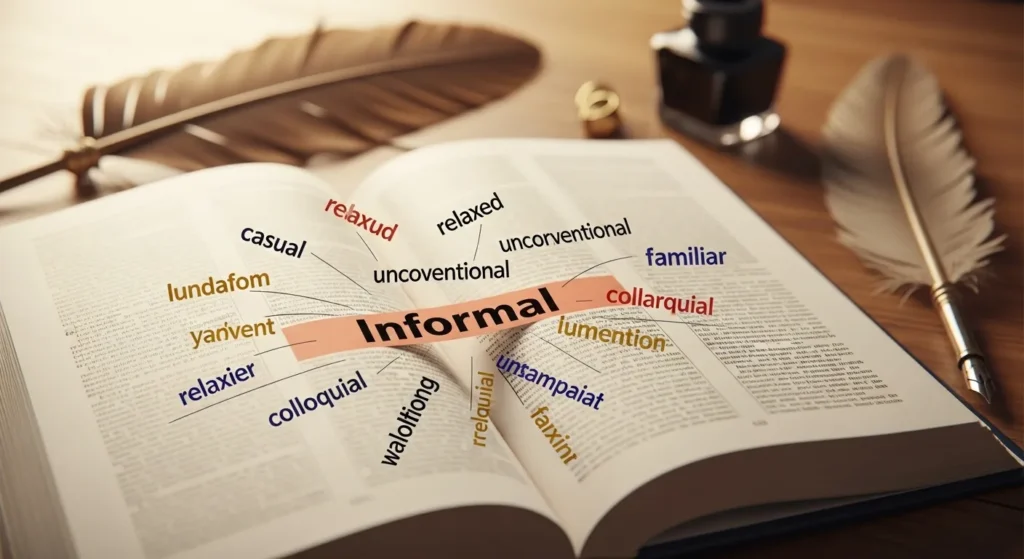

Have you ever sent a quick text to a friend and then written a serious email to your teacher? Notice the difference? One feels relaxed. The other feels proper. That relaxed style is called informal.
The word informal means something is casual, friendly, and not strict. It is how we talk to friends, family, or people we feel comfortable with.
Learning synonyms of informal helps students write better essays. Bloggers and content writers can make their tone friendly and natural. Daily English users can sound more relaxed and confident. If you want to improve your vocabulary, these synonyms of informal will help you a lot.
Let’s explore them.
Casual
Meaning:
Relaxed and not serious.
Examples:
- I wore casual clothes to the picnic.
- Let’s keep this meeting casual.
Relaxed
Meaning:
Calm and not strict.
Examples:
- The teacher was relaxed today.
- We had a relaxed chat at lunch.
Easygoing
Meaning:
Calm and not hard to please.
Examples:
- My boss is easygoing.
- She has an easygoing style.
Friendly
Meaning:
Kind and warm in behavior.
Examples:
- He gave me a friendly smile.
- The shop owner is very friendly.
Unofficial
Meaning:
Not approved in a formal way.
Examples:
- It was an unofficial meeting.
- This is just an unofficial plan.
Natural
Meaning:
Simple and not forced.
Examples:
- Her speech sounded natural.
- Just speak in a natural way.
Laid-back
Meaning:
Very relaxed and calm.
Examples:
- He is a laid-back person.
- The party had a laid-back vibe.
Simple
Meaning:
Not complex or fancy.
Examples:
- She wore a simple dress.
- Keep your message simple.
Plain
Meaning:
Basic and not decorated.
Examples:
- He used plain language.
- I prefer plain shirts.
Everyday
Meaning:
Common and used daily.
Examples:
- Use everyday words.
- This is everyday language.
Colloquial
Meaning:
Used in normal daily talk.
Examples:
- That word is colloquial.
- We used colloquial speech at home.
Conversational
Meaning:
Like normal talking.
Examples:
- Write in a conversational tone.
- Her style is conversational.
Chatty
Meaning:
Talkative in a friendly way.
Examples:
- He is very chatty.
- We had a chatty evening.
Social
Meaning:
Friendly and open with people.
Examples:
- She is very social.
- It was a social gathering.
Down-to-earth
Meaning:
Simple and practical.
Examples:
- He is very down-to-earth.
- I like her down-to-earth advice.
Free
Meaning:
Not controlled by strict rules.
Examples:
- The dress code is free.
- Feel free to speak.
Light
Meaning:
Not serious or heavy.
Examples:
- We had a light discussion.
- Keep the tone light.
Loose
Meaning:
Not tight or strict.
Examples:
- The rules are loose here.
- He wore loose clothes.
Open
Meaning:
Honest and relaxed.
Examples:
- We had an open talk.
- She is open with her feelings.
Homely
Meaning:
Comfortable and simple.
Examples:
- The room feels homely.
- It has a homely touch.
Cozy
Meaning:
Warm and comfortable.
Examples:
- It was a cozy cafe.
- We enjoyed a cozy night in.
Cordial
Meaning:
Warm and polite.
Examples:
- They had a cordial meeting.
- She gave a cordial welcome.
Warm
Meaning:
Kind and friendly.
Examples:
- He gave me a warm hug.
- She has a warm voice.
Approachable
Meaning:
Easy to talk to.
Examples:
- The manager is approachable.
- She looks approachable.
Intimate
Meaning:
Close and personal.
Examples:
- It was an intimate dinner.
- We had an intimate talk.
Personal
Meaning:
About private life.
Examples:
- That is personal news.
- He shared personal stories.
Unceremonious
Meaning:
Without special formality.
Examples:
- It was an unceremonious event.
- He made an unceremonious exit.
Improvised
Meaning:
Done without planning.
Examples:
- It was an improvised speech.
- We had an improvised party.
Spontaneous
Meaning:
Done suddenly and naturally.
Examples:
- She made a spontaneous plan.
- We went on a spontaneous trip.
Playful
Meaning:
Full of fun.
Examples:
- He has a playful tone.
- The kids were playful.
Informative (light)
Meaning:
Giving simple information.
Examples:
- It was an informative chat.
- She gave an informative talk.
Lively
Meaning:
Full of energy.
Examples:
- It was a lively debate.
- The party was lively.
Breezy
Meaning:
Light and cheerful.
Examples:
- She wrote in a breezy style.
- His reply was breezy.
Frank
Meaning:
Honest and direct.
Examples:
- He was frank with me.
- Give me a frank answer.
Direct
Meaning:
Clear and simple.
Examples:
- She gave a direct reply.
- Be direct in your email.
Unpolished
Meaning:
Not perfect or refined.
Examples:
- His speech was unpolished.
- The draft feels unpolished.
Rustic
Meaning:
Simple and country-like.
Examples:
- The house has a rustic feel.
- We stayed in a rustic cabin.
Streetwise
Meaning:
Smart in daily life.
Examples:
- He is streetwise.
- She gave streetwise advice.
Relaxing
Meaning:
Helping you feel calm.
Examples:
- It was a relaxing talk.
- We had a relaxing evening.
Informalistic
Meaning:
Having an informal style.
Examples:
- His tone was informalistic.
- The blog feels informalistic.
Soft
Meaning:
Gentle and not strict.
Examples:
- She used a soft tone.
- He gave a soft answer.
Carefree
Meaning:
Without worry.
Examples:
- She felt carefree.
- It was a carefree day.
Unstructured
Meaning:
Not organized in a strict way.
Examples:
- The talk was unstructured.
- We had an unstructured meeting.
Flexible
Meaning:
Easy to change.
Examples:
- The rules are flexible.
- She has flexible plans.
Simple-minded
Meaning:
Thinking in a basic way.
Examples:
- He gave a simple-minded reply.
- The idea sounds simple-minded.
Neighborly
Meaning:
Kind like a good neighbor.
Examples:
- They had a neighborly chat.
- She gave a neighborly wave.
Casual-minded
Meaning:
Not serious in thinking.
Examples:
- He is casual-minded.
- She gave a casual-minded answer.
Low-key
Meaning:
Quiet and not showy.
Examples:
- We had a low-key party.
- Keep the event low-key.
Offhand
Meaning:
Said without much thought.
Examples:
- He made an offhand comment.
- It was just an offhand joke.
Unconstrained
Meaning:
Not limited by rules.
Examples:
- The talk felt unconstrained.
- She enjoys unconstrained writing.
Conclusion
Learning synonyms of informal makes your English stronger and more colorful. It helps you write better blogs, essays, and emails. It also improves your speaking skills. When you know many words, you can choose the best one for each situation. Start using these synonyms of informal in daily conversations. Try them in your next message or school assignment. Practice every day, and your vocabulary will grow fast.